Nepal trekking in January can be really rewarding for patient travelers, as they get some of the clearest mountain views for the whole year during this time. The cold, dry air takes away the haze, so the peaks like Everest and Annapurna will appear sharp on the deep blue sky. If you have always been looking for the great treks to do in Nepal during January, then this article can lead you right to the weather, popular trails, expenses, permits, and how to pack so that you can go on a planned and smooth adventure. While the Nepal treks in the winter are Sure not for everyone, for example, hikers who love cold mornings will find it to be one of the most peaceful trail seasons as well as the most rewarding.
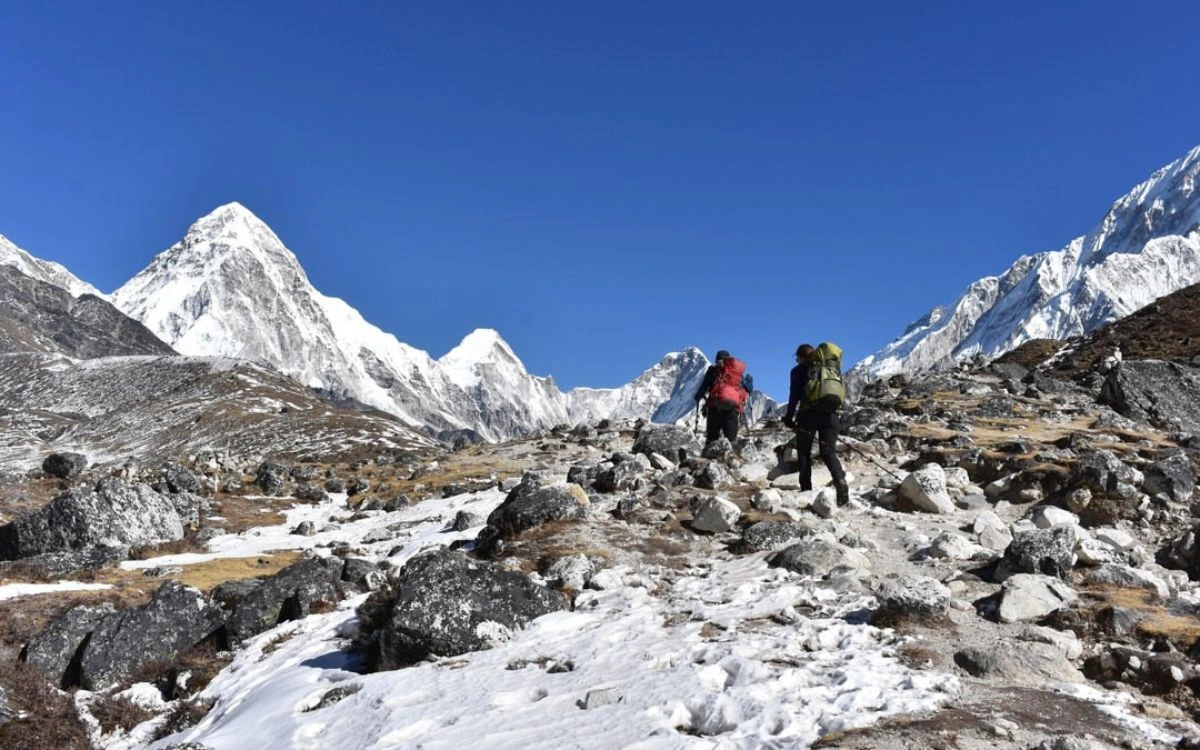
Hikers descending near Everest peaks during a Nepal trek in January
In either case, whether you've started your trekking in Nepal in the Himalayan region or are a regular trekker seeking a new path to walk through, January is a very nice choice for you.
Is January a Good Time to Trek in Nepal?
There are good chances of trekking in Nepal in January, in particular in the lower and middle regions of the hills. The ground will be dry, the trails less crowded, and your camera will capture a clearer shot of a majestic mountain in the background than during the monsoon, when foggy weather is common in Nepal.
But cold nights and fewer sunlight hours will be the drawbacks, plus the possibility of closure of a few high altitude passes due to heavy snow, which might be quite a disappointment for trekkers. Those who prefer isolation and clean mountain sights rather than warm and pleasant evenings with large gatherings in lodges will be able to enjoy trekking in Nepal during January.
Why Choose Winter Trekking in Nepal?
This time of year is the best one for the Nepal winter trek because you rarely see any other hikers, except maybe one or two locals. Most holidaymakers come during autumn and spring, and because of this, the trails, lodges, and everything are very peaceful during the winter. Not only can you pick teahouse rooms to your liking, but you'll also find lodge owners being more friendly and helpful because there is no rush to accommodate many tourists in the same timeframe. And you can even take in clear Himalayan mountain views that are otherwise not possible due to cloud cover during monsoon and springtime and even dust. Besides, it is a good time for guides to tell some folklore or stories, since there is little time to spend in different parts of the trail.
Nepal Weather in January
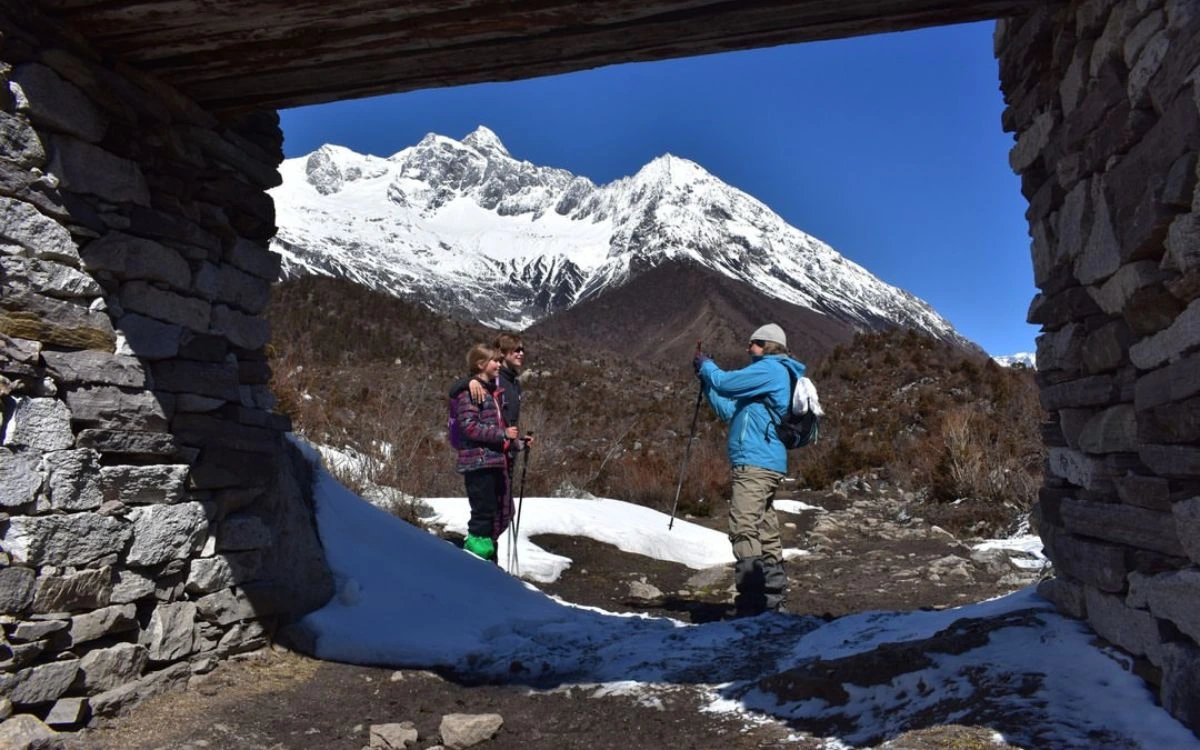
Trekkers viewing snowy Langtang peaks on a January trek in Nepal
Climate Variants Across Regions
The weather in January in Nepal is highly variable due to changes in elevation. In lower regions like Kathmandu and Pokhara, temperatures usually remain around 15 to 18 ddegreesCelsius during the day, falling just short of freezing point at night. At mid-altitude hiking villages at elevations ranging from 2,500 to 3,500 meters, you'll find that the day temperatures range between 5 and 10 degrees Celsius while night temperatures remain quite below freezing. Beyond 4,000 meters elevation, the temperature during the day often remains near or below freezing; the night temperatures can even drop as low as minus 16 degrees, or much colder, that depends. For trekking in Nepal during January, being ready for all weather scenarios with the right outfit and also finding trails that suit their tolerance for the cold will be greatly rewarded.
Types and Impacts of Snowfall
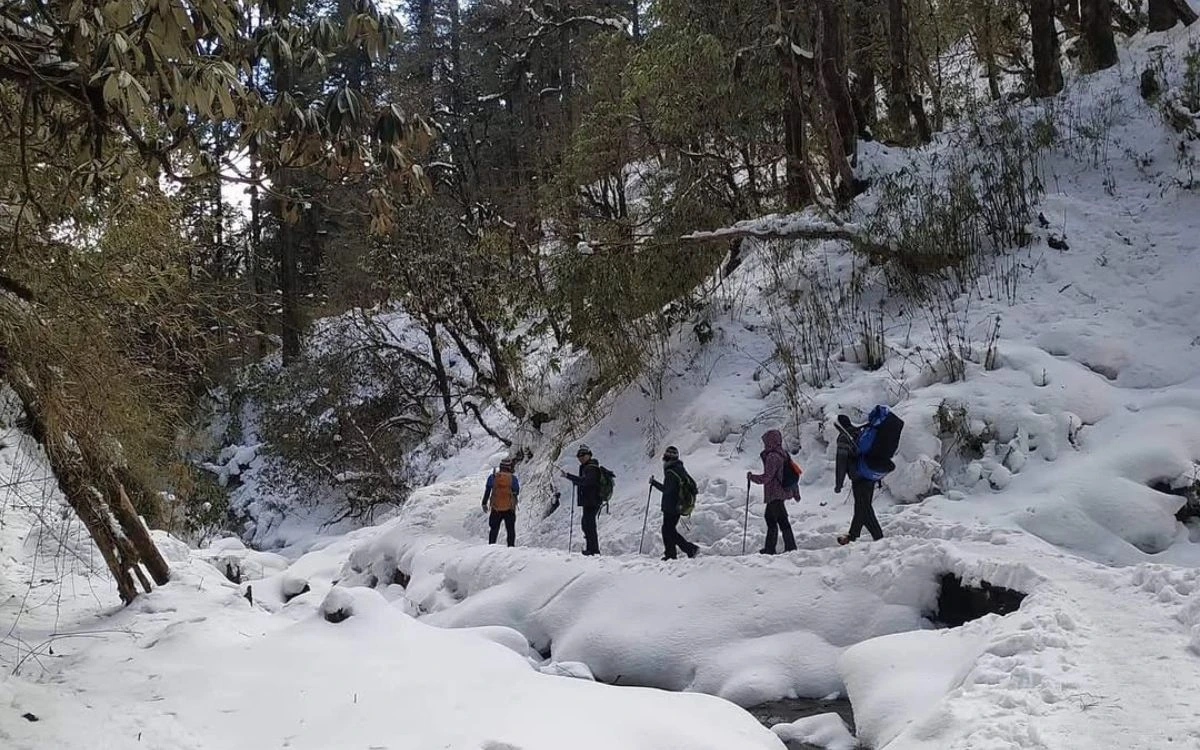
Snowfall is not uncommon above 3,500 meters, and many high mountain passes may get snowed over once in a while. Then again, lower altitude trails around places like Pokhara, Ghandruk, or Langtang Village are often open and walkable all year round. But, high mountain passes are vulnerable to heavy snow, and some examples are Thorong La on the Annapurna Circuit and Larke La on the Manaslu Circuit, and they can close after a large amount of snow comes and they can be closed for a while. The condition of roads/treks in winter in Nepal can be quite different and change at short notice. For that flexible planning, hiring local guides, etc., will be much more essential at this period than usual.
Not every trail works the same in winter conditions, but a few of the routes remain a top choice even now. This article highlights some of January's most popular trekking trails in Nepal and explains how long and active each trek is.
Hikers descending near Everest peaks during a Nepal trek in January
Winter treks to Everest Base Camp in January
It's only natural if you're still contemplating whether you will enjoy a long hike in freezing winter weather or not, the Everest base camp trek is a great winter activity. January, when mountains are at their most majestic, is a perfect month for this walk, in particular for those wishing to see the Everest summit closely. It gets extremely cold in the Himalayas, and even nights in Gorak Shep and Base Camp will drop way below freezing, but with the right clothes, you'll be quite comfy during the day, and also, there are hardly any fellow trekkers to spoil your quiet time in nature. If you want to get in touch with a local trekking guide, there are more opportunities for it since fewer people come around these places.
It is a trek in the Annapurna Circuit that can be experienced even in January. Though fresh snowfall at Thorong La Pass at a height of 5,416 meters regularly causes the pass to get blocked, because of this, many trekkers only finish half of the circuit if possible. Should the pass be passable, then it still is a risky venture unless you are going with an advanced mountain guide, and you can acclimatize effectively. It's wise to consult the latest update from the trekking company about the pass situation before you plan on a complete crossing.
In addition to ABC's 4,130-meter elevation, the route can become extremely slick and icy due to the snowfall in January. In fact, if this snow makes you want to walk with a snow boot instead of hiking shoes, then you could call the upper trail of Deurali and Base Camp a genuine winter trail. Some teahouses are only open at the height of winter. Because of this, it's important to verify the lodge availability during a cold winter month. On sunny days, the range of mountains encompassing Annapurna Base Camp is nothing short of a picture-postcard-perfect scenery.
The Langtang trek is perhaps the best and simplest winter hike near Kathmandu. Kyanjin Ri, the valley's highest common point, is located at an elevation of about 4,773 meters. If visitors have the necessary equipment, they can enter the valley throughout the winter. The advantage of having a very short travel time from Kathmandu also makes this area a perfect place for trekkers running short on days to spare.
Due to its location in the rain-shadow area, Upper Mustang receives comparatively much less snow than other trekking routes of closer vicinity to the main Himalayan range, which means that it is snowbound for a shorter duration compared to the main mountain trekking trails. Its dry and desert-like environment and low level of average precipitation make it a very reliable winter trek, but the extremely cold nights in the mountains that are not covered by snow can be quite uncomfortable.
In this trek, the Manaslu Circuit covers and reaches the heights of the Larke La Pass at 5,106 meters, where heavy snow is a risk during the winter months, similar to that for the Thorong La Pass on the Annapurna side. So, trekkers who plan to walk it in January are advised to prepare their routes with several additional day safety measures and have themselves guided by expert local professionals who can update them on the current conditions of the pass.
Shorter Winter Treks: Mardi Himal & Ghorepani Poon Hill
Those trekkers who are time-constrained can go for the Mardi Himal trek and Ghorepani Poon Hill, which provide amazing winter views even at low elevations. Among other things, Poon Hill is located at an altitude of 3,210 meters and rarely suffers any major closure during the winter. That means it is good for your inaugural trip to the Himalaya or family trekking.
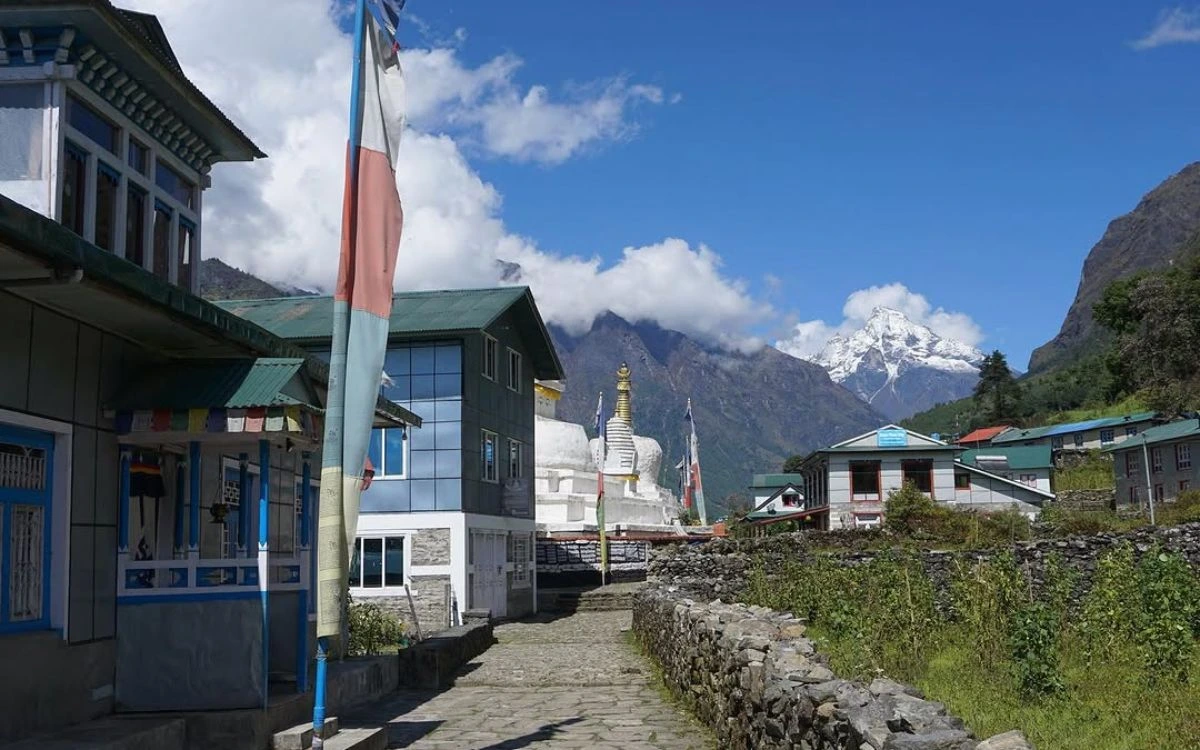
Namche Bazaar village with snow-capped peaks, Nepal trekking in January
Altitude and Weather Challenges
Low temperatures compound the already tough conditions for high-altitude trekking. The risk of frostbite becomes higher, available water sources will probably freeze at night, and the shortening daylight hours provide less time to be on the trail every day. Winter does not eliminate the risk of altitude sickness; That means the slow climbing and proper acclimatization days should still be considered the same as in any other season.
Safety Tips for Winter Trekking
Wear layers, pack a four-season sleeping bag that is suitable for sub-zero temperatures, and get into a habit of going over the weather forecast with your guide every day. Don't insist on crossing a closed pass; better to wait a day or find another way. Keep your water bottles warm so you can avoid frozen water, and have a headlamp with you all the time as the dark descends very early - about 5:30 p.m. in January.
Permits, Accommodation & Costs
Required Trekking Permits
The majority of trails have a prerequisite of a TIMS card and a National Park or Conservation area permit, but a special restricted area permit arranged through a registered trekking agency is required for Restricted Areas like Upper Mustang, Manaslu, etc. Permit rules are quite flexible, so do check with your operator for up-to-date requirements for these items before departure.
The tea houses in popular winter trails like Everest Base Camp, the beginning section of Annapurna Base Camp, and Langtang remain operational, though some of the higher ones shut for the season at this time. It is easy to get rooms in January as the number of trekkers drops drastically, but the only heating usually available is the stove in the dining hall, so take along warm nightclothes.
Trekking Cost Breakdown
Expense
Budget Range (per day)
Notes
Teahouse lodging
$3 - $10
Often free with meals purchased
Meals
$15 - $25
Prices rise at higher altitudes
Guide
$25 - $35
Recommended for winter routes
Porter
$20 - $25
Optional, eases winter gear load
Permits
$20 - $50 (one-time)
Varies by region
January Trekking Packing List
Essential Winter Clothing
Pack a down jacket rated for sub-zero temperatures, thermal base layers, a windproof and waterproof outer shell, insulated trekking pants, wool socks, gloves, and a warm hat that covers your ears. Layering matters more than any single heavy item, since it lets you adjust as temperatures swing between daytime sun and freezing mornings.
Recommended Trekking Gear
Bring trekking poles for icy patches, gaiters to keep snow out of your boots, a sturdy pair of insulated waterproof boots, sunglasses for snow glare, and a reliable headlamp with spare batteries. A refillable insulated water bottle and hand warmers make cold mornings noticeably easier.
Transportation & Flight Information
Domestic Flights
Flights to Lukla for the Everest area usually begin from Ramechhap during peak season, and with the clear skies in January, there are hardly any weather-related delays compared to the monsoon season, which is usually cloudy; still, occasionally, morning fog often means a short wait time.
Roads & Delays
Roads to hiking destinations like Besisahar or Syabrubesi are generally in good condition in January, except for early morning ice on high mountain roads,s which can hamper bus movement. It is always a good idea to build up a buffer day before the trek starts.
Essential Tips for Trekking in Nepal in January
Trekkers crossing a snow-covered trail in Nepal in January
Hiring a Guide or Porter
The local guide makes an important difference in the winter season by reading weather and pass conditions to tell you which teahouses stay open. Carrying your additional winter gear can be a physical burden, and porter service will relieve this pressure while you're on the train.
Tips for Health and Altitude
Drink lots of water because cold weather may suppress your urge to get thirsty, yet your body is still in need of hydration at high altitude. Go upwards slowly and observe headache and nausea, the signs that you are already suffering from altitude sickness, and in no case disregard the symptoms so that you can keep the schedule.
Do not leave waste behind, bring water bottles to refill so that you won't contribute to littering with single-use plastics, and support local businesses by staying with host families and lodging in homestays or lodges run entirely by members of the local community whenever that is possible.
FAQs
Is it safe to trek in Nepal in January?
Yes, with proper gear, an experienced guide, and flexible timing around high passes, trekking in Nepal in January is generally safe for prepared hikers.
Which trek is easiest in January?
Ghorepani Poon Hill and the lower Langtang Valley trail are among the easiest winter treks, thanks to lower altitude and stable trail conditions.
Do I need special gear for January treks?
Yes, a sub-zero-rated sleeping bag, down jacket, and layered thermal clothing are essential for comfort and safety.
Are teahouses open in January?
Most teahouses on popular routes stay open, though some higher-altitude lodges close for the coldest weeks of the season.
Can beginners trek in Nepal in January?
Beginners can comfortably manage shorter, lower-altitude routes like Poon Hill, though higher routes are better suited to experienced trekkers.
Conclusion
January rewards trekkers with clear skies, quiet trails, and some of the best mountain photography of the year, provided you are prepared for the cold. Choose your route based on your experience level, pack the right winter gear, and travel with a knowledgeable guide who can read changing trail conditions.
Let us know at Himalayan Recreation Treks and Expedition help you plan a safe, well-organized winter trek in Nepal today.


-2.webp)


 based on 42 reviews




-6.webp)
-1.webp)
-1.webp)