Nature's rhythm in Nepal shapes almost everything, from the mountain views to the condition of the footpaths. That's why the right time to travel is almost as crucial as the place you choose. This article discusses Nepal's five seasons, when they occur, and which is best for trekking, hiking, climbing, or touring. If you're after varied landscapes, Nepal won't disappoint: the Terai, a warm lowland jungle; the lush, green terraced hills around Kathmandu; and the high Himalayas bordering Tibet, home to the world's highest peaks.
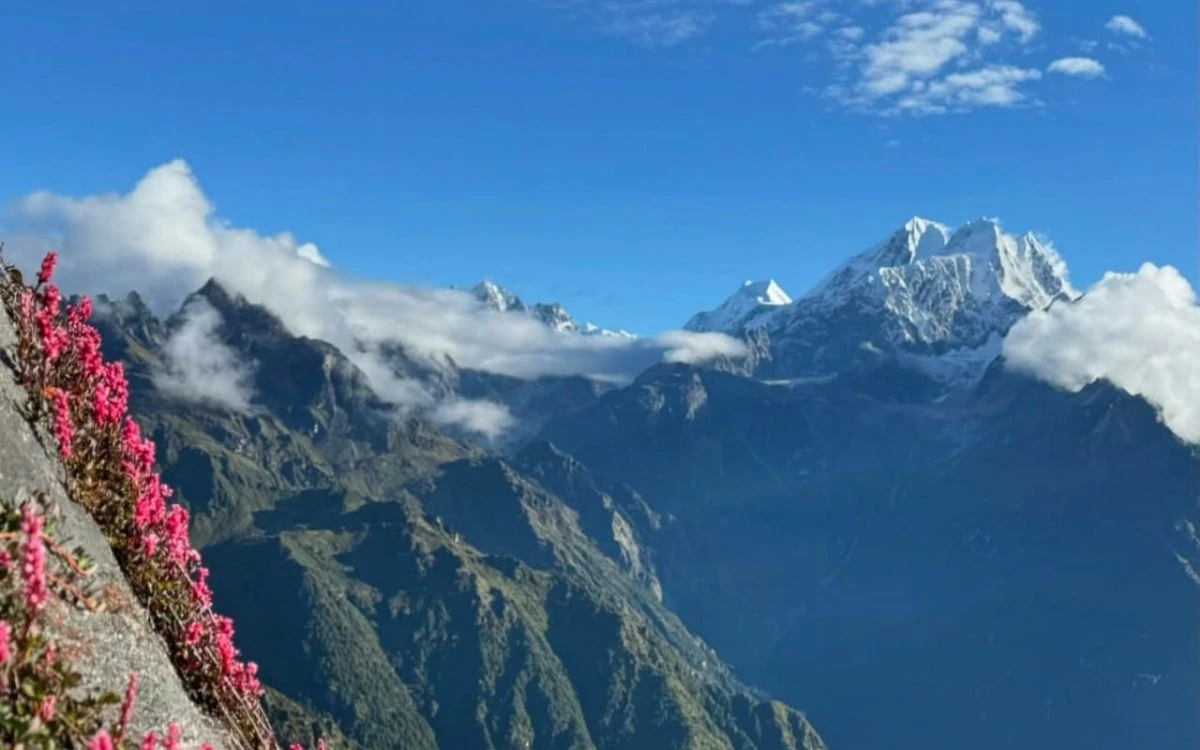
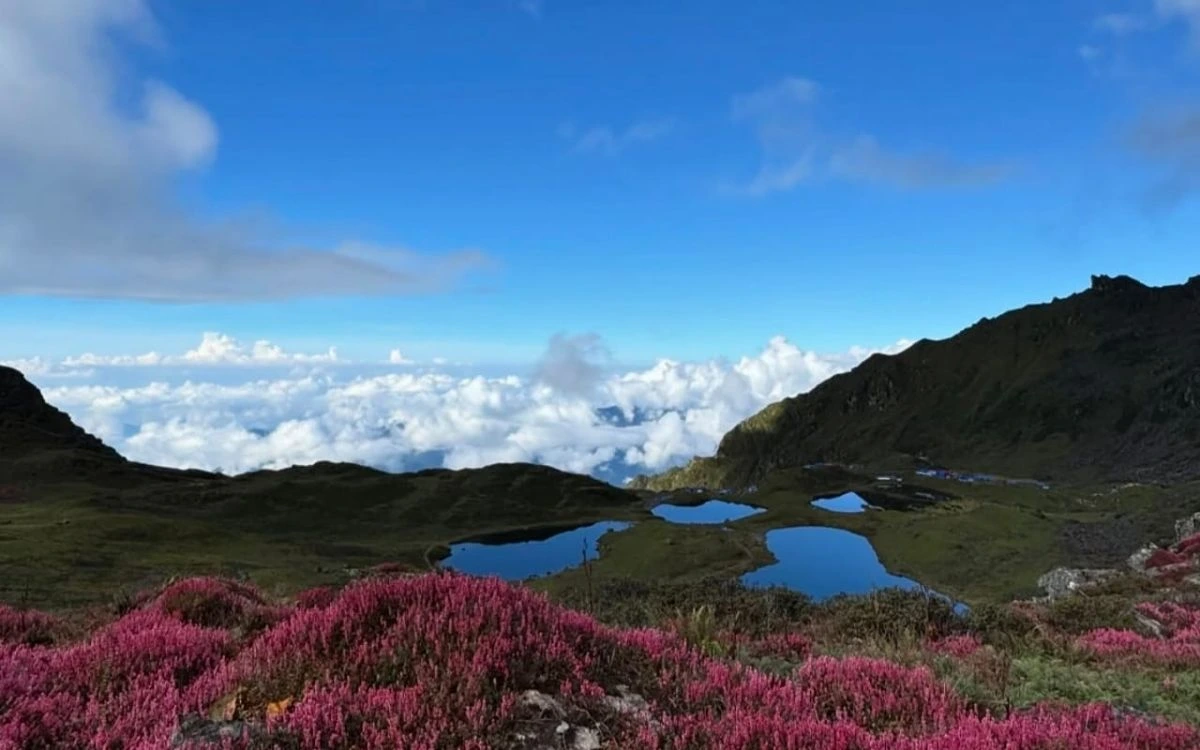
Blooming rhododendrons framing cloud-wrapped Nepal peaks
The difference in elevation from the lowest point at around 100 meters to the highest peak over 8,000 meters results in sudden and great changes in the weather even during a single day's drive on the road or an hour or so walk uphill.
Because of that range, the season a traveler picks has a real effect on the trip itself. A trail with crisp mountain views in October can sit under cloud in July, and a climb that's routine in spring can turn risky in mid-winter. This guide answers the most common question first: how many seasons Nepal has, then walks through what each one is like and which activities suit it, with notes on popular Trekking in Nepal routes woven in along the way rather than listed separately.
How Many Seasons Are There in Nepal?
Nepal has five seasons: spring, summer, monsoon, autumn, and winter. This varies from the 4-season calendar most tourists are familiar with, and that's why the article is making a point upfront, because the query is one of the most common searches about the country. The traditional Nepalese lunar calendar recognizes six different seasons, but the Nepal tourism ministry and most itineraries follow the 5-season system, where monsoon is considered separate from summer.
Season
Months
General Weather
Best For
Spring
March – May
Mild to warm
Trekking, climbing, sightseeing
Summer
June
Warm and humid
Tours, lower-altitude travel
Monsoon
June – September
Rainy and humid
Rain-shadow destinations
Autumn
September – November
Clear and pleasant
Trekking, hiking, tours
Winter
December – February
Cold and generally dry
Hiking, lower-altitude treks, tours
Snow can arrive early or even linger late, while the Terai is still warm when the hills are cold - these months are really just a guide. Besides, elevation and area mean almost as much as the actual date, and for this reason, if two people arrive in the country on different days but also at different heights or parts, you can still find a different climate in one of them than in the other.
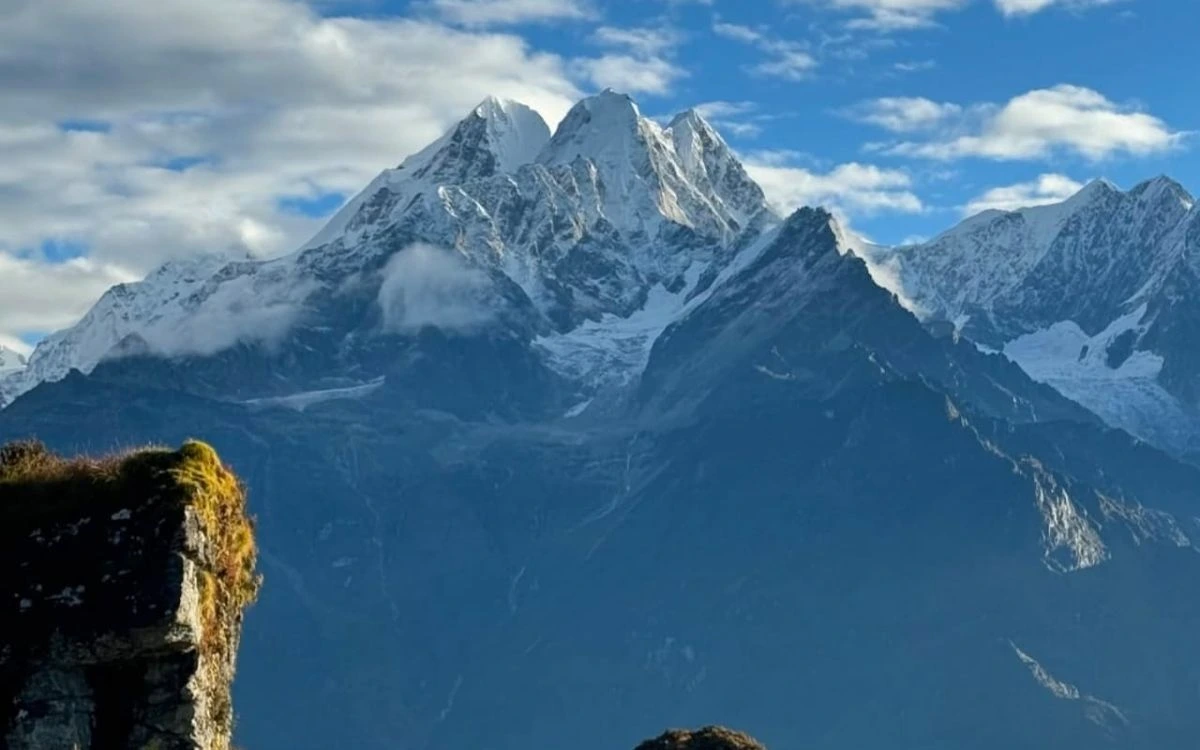
Snow-covered mountain range seen from a rocky viewpoint in Nepal
Squeezed between the flat, fertile Gangetic plains of India to the south and the barren Tibetan heights above, the tiny country of Nepal is an astonishing topographic change from very warm subtropical to alpine cold within only 124 miles (200 kilometers). In the hot and wet Terai, the temperature gradually drops going up the gentle hills around Kathmandu and Pokhara, and at an altitude of 4,000 meters (13,124 ft), roughly the high Himalaya, the snow is frequent, and even in summer it is freezing. This is the reason why trekkers going from Kathmandu to everest region can get themselves a pair of shorts and a down jacket within a week if only they keep ascending, and because of that it would be wiser to wear your clothes in many layers than to carry with you clothes for any specific season only.
Spring Season in Nepal (March – May)
Spring, one of the peak seasons in Nepal, is a great reply to the best time to go trekking in Nepal. "inquiry. A gradual rise in temperature, the whole landscape blooming due to the blooming of the rhododendron on the hills for the months of March and April, and the beautiful views of the mountains that remain clear right from the morning, and then, after the afternoon, the clouds start developing. It turns out that the climbing season is also at its peak in the country, including climbing on Everest, thanks to the combination of predictable weather and the snow that isn't too difficult to manage.
During spring there is no wonder that the trail sees an increase in footfalls. The Everest Base Camp Trek, Annapurna Circuit Trek and Annapurna Base Camp (ABC) are all the main hiking circuits that are usually done in spring. For those who want to spend more time away from the crowds, the Langtang Valley Trek is a good short trek that stays near Kathmandu. Although spring means predictable weather and, because of this, the crowds that come with it, popular places and places to stay get booked during the busiest weeks, so it is advisable to plan.
Summer Season in Nepal (June)
Mahabharmi or "summer rains" of Nepal are relatively short and transitional months, a kind of dry period before the monsoon. The temperatures become warm while humidity levels become higher. Mostly in the Terai and Himalayan parts of Kathmandu Valley, the afternoons become drier and the showers more regular as the day goes on. In the summer, hiking at high altitudes loses some attraction as clouds obstruct the visibility of mountains, so most of the hikers who aim at doing the most spectacular trails delay it until the autumn rather than enduring summer with its wet period. This time, though, is quite acceptable for sightseeing in Kathmandu Valley where a clear view of the mountains is not an overriding consideration, so people should plan it so that it is convenient for them.
Monsoon Season in Nepal (June – September)
It is monsoon season that most international travelers have questions about, and if you go with the right expectations, it is still possible to travel Nepal, even through the rains. There is rainfall most of the days, normally in the afternoons or overnight, which is quite local. The footpaths in the valleys and hills become muddy, and fog makes it impossible to see the mountain peaks so far, and all you see is just the clouds.
In addition, the surrounding areas become vibrant and green, the waterfalls are at their most powerful, and places of interest in Kathmandu and Pokhara get A lot quieter. Trekking is definitely feasible with a number of exceptions. The Himalayas, in particular the southern slope, face most of the monsoon's rainfall, and the threat of landslides is real. One exception is the rain-shadow area of Nepal - the mountains of this region block most of the monsoon rain; the Upper Mustang Trek is dry and can be walked at the same time other parts of the country are receiving monsoon rains. A similar situation prevails if you go to a more western location, say to Dolpo. Glass rainwear and quick-dry clothing will serve you well, but the most important thing will be the flight delays when you fly to Lukla, where a buffer day or two will be of immense help.
Autumn Season in Nepal (September – November)
Autumn in Nepal is often hailed as the perfect season for trekking. The monsoon ends, allowing for stable weather conditions, lessened mud and the clearest mountain views of the year. Also, it is the second major climbing season, usually more settled than spring for peaks like Mera Peak and Island Peak.
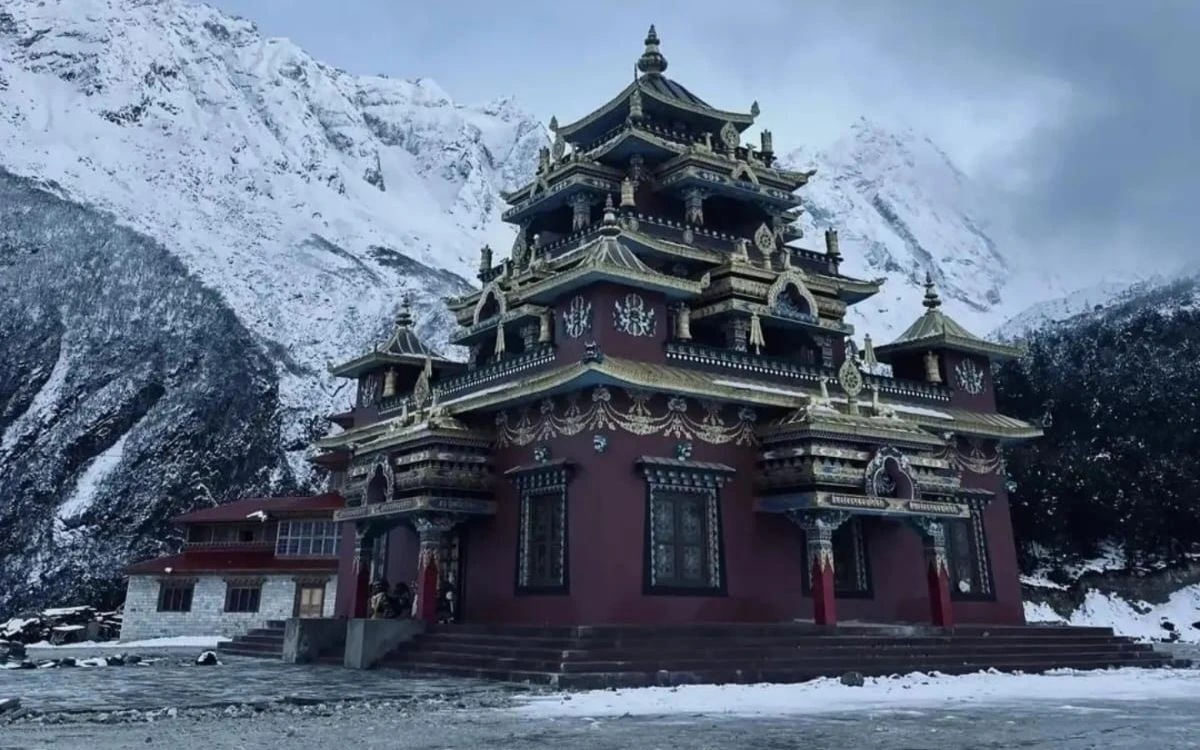
Ornate monastery in Manaslu region with snow-capped peaks behind
Almost every important trekking route is ideal in late summer / early autumn (September to November). For instance, the Everest Base Camp Trek will deliver your best views,the Annapurna Circuit Trek will allow passage through dry and snowless passes, and the Manaslu Circuit Trek, whichis usually quieter than Annapurna Circuit has lately been drawing more hikers. Langtang Valley and Annapurna Base Camp (ABC) are perfect for shorter autumn treks. Besides, the season coincides with Dashain and Tihar, the biggest Nepali festivals, which is one of the reasons that both trails and airports get very busy - so it's worth booking your trips and tickets in advance.
With the temperature dropping and the environment quieter, winter is still, in no way closed. The days are usually dry and sunny at the lower elevations, when the nights turn really cold; trekking is pretty easy below around 4,000 meters. Fewer trips, like the Poon Hill trek and the lower area around Base Camp (ABC) of Annapurna, continue to be open, whereas high passes on trails like the Annapurna Circuit Trek can close down or require very cold-weathergears. Above 4,000 meters, a person would feel very cold and may get snowfall; besides, some teahouses might get closed, so one needs a down jacket, warm sleeping bag, and thermal layers for high-altitude journeys. Winter comes at a price for the tourist; they can have the skies at their disposal and not be burdened with huge crowds as they usually are in spring or autumn.
Nepal Seasons by Month
Month
Season
Trekking Conditions
January
Winter
Good below 4,000m; high routes cold
February
Winter
Good below 4,000m; high routes cold
March
Spring
Excellent, season begins
April
Spring
Excellent, peak season
May
Spring
Good, warmer and hazier
June
Summer/Monsoon transition
Limited
July
Monsoon
Rain-shadow routes only
August
Monsoon
Rain-shadow routes only
September
Monsoon/Autumn transition
Improving
October
Autumn
Excellent, peak season
November
Autumn
Excellent
December
Winter
Good below 4,000m
Best Time to Visit Nepal by Purpose
For a quick reference, here's how the best time to visit Nepal shifts depending on what a trip is actually for.
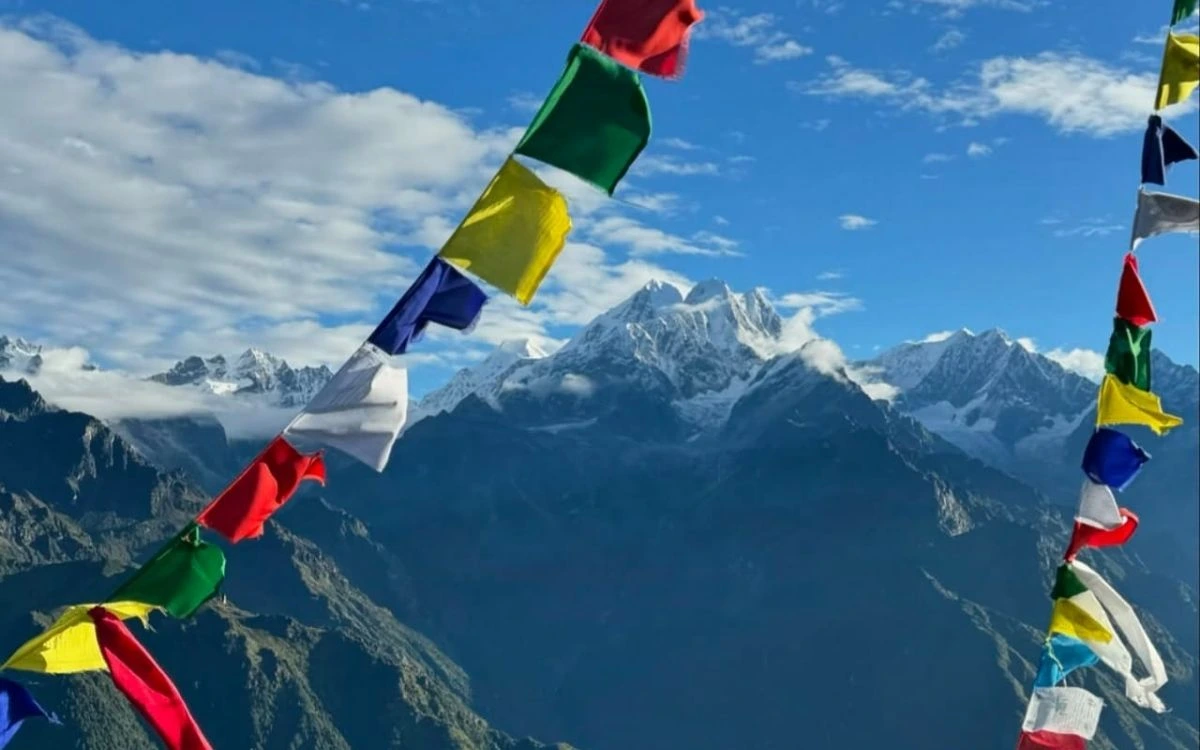
Prayer flags fluttering against a backdrop of Nepal's mountains
Nepal has numerous different regions with a variety of weather. The Kathmandu Valley and Pokhara have excellent weather in autumn and winter, and spring is not far behind, which means that this is when the Annapurna Circuit trek and the Annapurna Base Camp (ABC) routes are dry, and the mountain views from Pokhara are at their best. The Everest and Langtang regions have the same pattern, where flights into Lukla are most dependable in autumn for both the Everest Base Camp trek and the Langtang Valley Trek because of favorable weather at this time. However, Mustang is unique as it has a rain-shadow position, and the Upper Mustang trek can be done even during the monsoon season. The Terai and Chitwan are best visited in winter and spring when the weather is cooler and drier.
Travel during off-peak spring and autumn seasons has some great advantages. You can have the much-needed peace on the trails, bedding down at a teahouse when you want, and often benefit from better prices. However, you will have to face some unpredictable weather. For example, the Upper Mustang hiking tours are perfect during the rainy season, while low-altitude hiking trips are better in winter.
Packing is worth planning by season rather than using one generic list:
Spring: light layers, a warmer layer for altitude and evenings, sun protection, light rain shell
Summer/Monsoon: quick-dry clothing, rain jacket and pack cover, waterproof footwear, leech socks for lower trails
Autumn: insulated jacket for cold mornings and evenings, sun protection, broken-in trekking boots
Winter: down jacket, sleeping bag rated well below freezing, thermal base layers, warm gloves and headwear
Frequently Asked Questions About Seasons in Nepal
How many seasons are there in Nepal?
Nepal officially has five climatic seasons (Spring, Summer, Monsoon, Autumn, and Winter), though culturally it is divided into six traditional Ritus. While Western tourism recognizes four main seasons, the presence of the distinct summer monsoon creates a unique 5-season climate cycle. Traditional Nepali culture recognizes six two-month seasons: Basanta (Spring), Grishma (Early Summer), Barkha (Monsoon), Sharad (Autumn), Hemanta (Pre-Winter), and Shishir (Winter).
What is the best season to visit Nepal?
Autumn (September to November) and Spring (March to May) are the absolute best seasons to visit Nepal. Autumn offers post-monsoon crystal-clear mountain views, stable weather, and major cultural festivals. Spring brings blooming rhododendrons, warmer temperatures, and optimal conditions for high-altitude trekking and mountaineering.
Which season is best for trekking in Nepal?
Autumn is the #1 season for trekking in Nepal, followed closely by spring. During autumn, monsoon rains clear the atmosphere, yielding the highest visibility and driest trail conditions of the year. Spring ranks a close second, offering longer days, vibrant wild floral blooms, and manageable high-altitude pass crossings.
Can you trek in Nepal during the monsoon season?
Yes, you can trek in Nepal during the monsoon season (June to August), but only in rain-shadow areas. Trans-Himalayan regions like Upper Mustang, Dolpo, and Nar Phu sit behind the main Himalayan wall, blocking the monsoon clouds and keeping trails completely dry while the rest of Nepal experiences heavy rainfall.
Panch Pokhari's alpine lakes surrounded by blooming wildflowers
Which is the best month for trekking in Nepal?
October is universally rated as the single best month for trekking in Nepal. October provides the perfect balance of mild daytime temperatures, exceptionally clear skies for mountain photography, dry trails, and vibrant cultural energy during the major festivals of Dashain and Tihar.
Which season is best for mountain climbing in Nepal?
Spring (April to May) is the primary peak season for mountain climbing, while Autumn (September to October) serves as the secondary season. Spring offers warming temperatures and stable weather windows required for major 8,000-meter peaks like Everest, while Autumn is preferred for technical trekking peaks and lower-altitude expeditions.
Is winter a good time to visit Nepal?
Yes, winter (December to February) is a great time to visit Nepal for lower-altitude activities, cultural tours, and jungle safaris. Cities like Kathmandu, Pokhara, and Chitwan enjoy pleasant, sunny days. However, high-altitude trekking trails (above 4,000 meters) become extremely cold with heavy snow risk and closed passes.
What is the rainy season in Nepal?
The rainy (monsoon) season in Nepal runs from June through September. Driven by moisture-laden Bay of Bengal monsoon winds, this season brings heavy downpours, high humidity, cloud-covered peak views, and frequent landslides in hill regions.
Conclusion
Nepal has five seasons; however, not one can be singled out as the perfect season for every traveler. The appropriate season depends primarily on whether the intention is going outdoors, trekking, climbing, embarking on cultural tours, going for wildlife viewing, or visiting the region, which is characterized by its unique features inherent in a specific season.


-1.webp)


 based on 7 reviews


-6.webp)
-6.webp)