If you are planning a trekking or climbing adventure in Nepal, it is important to have the right Travel insurance for trekking in Nepal. The Himalayan region has more than 120 trekking trails and many peaks above 6,000 meters, including Everest Base Camp. The weather is also unpredictable, and medical facilities are limited in the remote regions. Even a common illness or injury can turn serious if not treated or evacuated promptly.
Typical trekking insurance policies in Nepal do not include high-altitude trekking and climbing. Research indicates that 25% to 40% of trekkers above 3,000 meters are susceptible to altitude sickness. It is, therefore, important to select the right insurance that includes medical emergencies, helicopter evacuation, and rescue services. There are also organizations such as the Himalayan Rescue Association and Nepal Mountaineering Association that conduct joint rescue efforts, but the right high-altitude trekking insurance will ensure that you get the services when you need them.
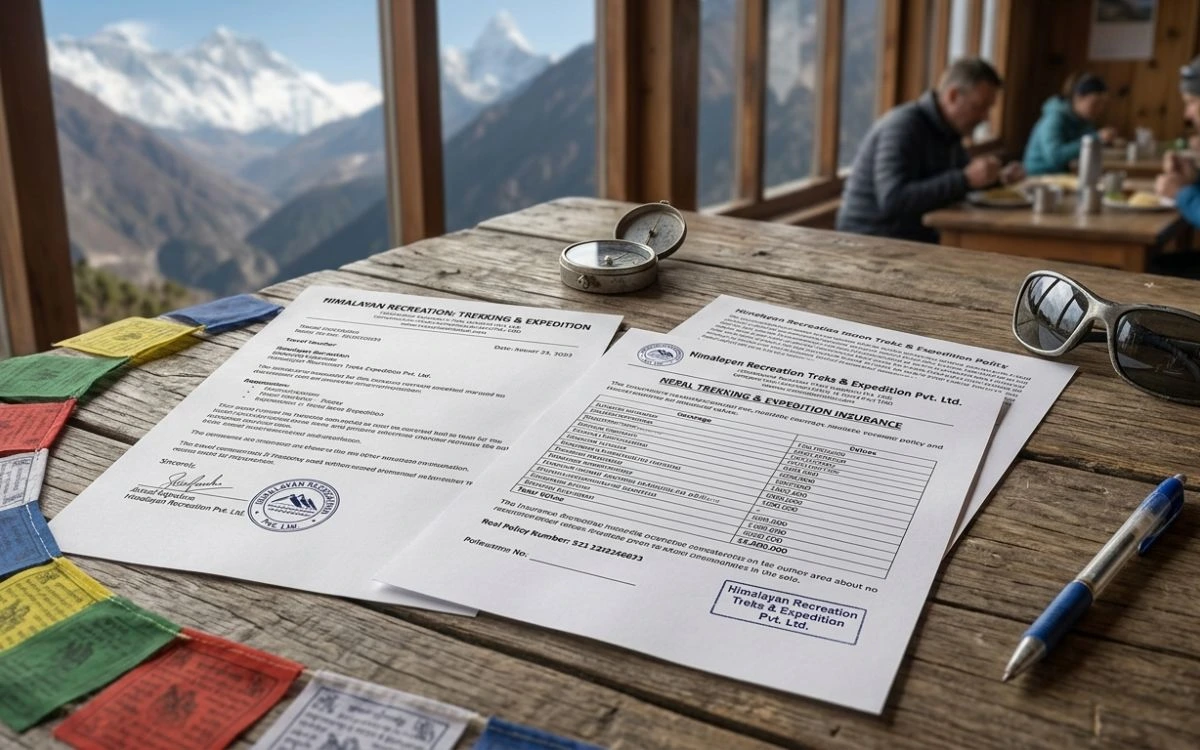
Sample photo of a travel insurance in Nepal
For climbers, there is specialized Travel insurance for climbing in Nepal for technical climbs and peaks above 6,000 meters. To be safe, you can select a plan that has altitude limitations, evacuation, and medical benefits.
In this blog, we will give you expert advice on travel insurance for trekking and climbing in Nepal, whether it is high altitude, helicopter evacuation, or advice on how to stay safe in the Himalayas. Use reliable information to plan your adventure.
Why Travel Insurance Is Essential for Trekking and Climbing in Nepal?
High Altitude Risks
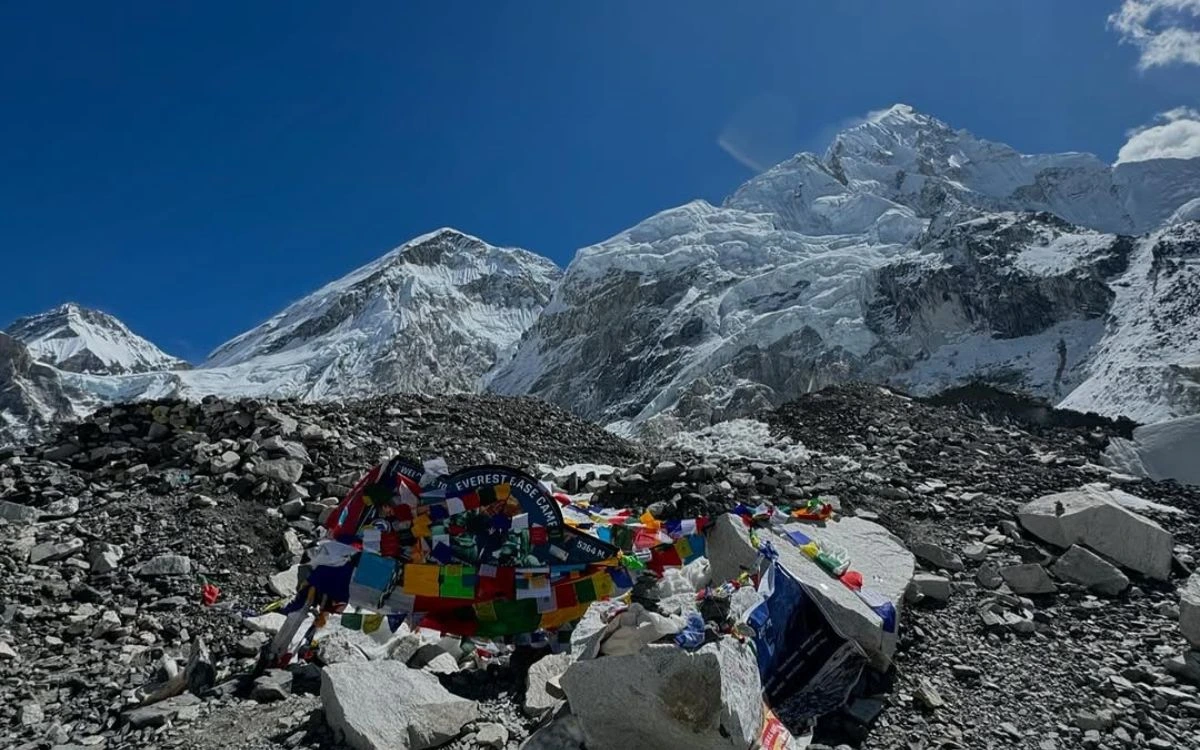
Most treks involve high altitudes. Everest Base Camp is at 5,364 meters, and there are passes in Nepal above 5,000 meters that trekkers have to cross. At such altitudes, the oxygen content is 50% lower than that at sea level. This makes Acute Mountain Sickness (AMS) a possibility. According to Himalayan rescue statistics, altitude sickness is one of the most frequent health issues among trekkers. In serious cases, trekkers have to be rushed down or flown out by helicopter. Trekking insurance in Nepal must cover treks at high altitudes, which may go up to 5,000-6,000 meters or more in the case of climbing expeditions.
Helicopter Evacuation
Helicopter rescue is common in remote trekking regions like the Everest Region. Lukla Airport is at 2,860 meters, and after that, there is no road access. In case a trekker suffers a serious illness or injury, the quickest way to evacuate them to Kathmandu is by helicopter. The average cost of a helicopter rescue in Nepal varies between USD 3,000 and 10,000, depending on the distance and weather. In case a trekker lacks insurance, they have to pay the cost of rescue before being evacuated. Your trekking insurance in Nepal must include coverage for emergency helicopter rescue at the altitude you intend to trek.
Limited Medical Facilities in Mountain Regions
In most mountain villages, there are health posts that offer basic health care only. These health posts lack modern medical equipment like CT scans, operating theaters, and intensive care units. For serious cases of injuries, bone fractures, or altitude sickness, patients are referred to hospitals in Kathmandu. In some distant regions, such as the Manaslu Region, evacuation is the only alternative in case of emergencies. Insurance coverage will give you access to health care without incurring high hospital expenses.
Trip Cancellation and Delays
The weather in Nepal can change quickly, and this is particularly true in the mountains. Flights to Lukla are often delayed or cancelled because of low visibility and high winds. When the trekking seasons are at their peak, there can be hundreds of trekkers waiting for flights to resume. Moreover, landslides and snowstorms can close trails and roads. This will lead to higher costs for accommodation and food. There are insurance policies available for trekking in Nepal that can include the cost of trip interruption, missed flights, and additional expenses due to weather-related disruptions.
Coverage for Climbing Activities
Nepal alone issues climbing permits for hundreds of peaks every year that are above 6,000 meters. Peaks like Island Peak (6,189m) and Mera Peak (6,476m) are popular trekking peaks that are sought after by adventure-seekers from all over the world.
Regular travel insurance policies do not include mountaineering as a covered activity and usually restrict trekking insurance to a maximum altitude of 3,000-4,000 meters. Some trekking insurance policies might include altitudes of 5,000-6,000 meters, depending on the insurance company.
When climbing peaks above 6,000 meters, one needs to buy mountaineering insurance that includes technical climbing and evacuation at high altitudes. It is essential to check that the insurance policy includes the highest altitude that you will be climbing, as otherwise, rescue and medical expenses can be very costly.
Best Travel Insurance Recommendations for Trekking and Climbing in Nepal (2026)
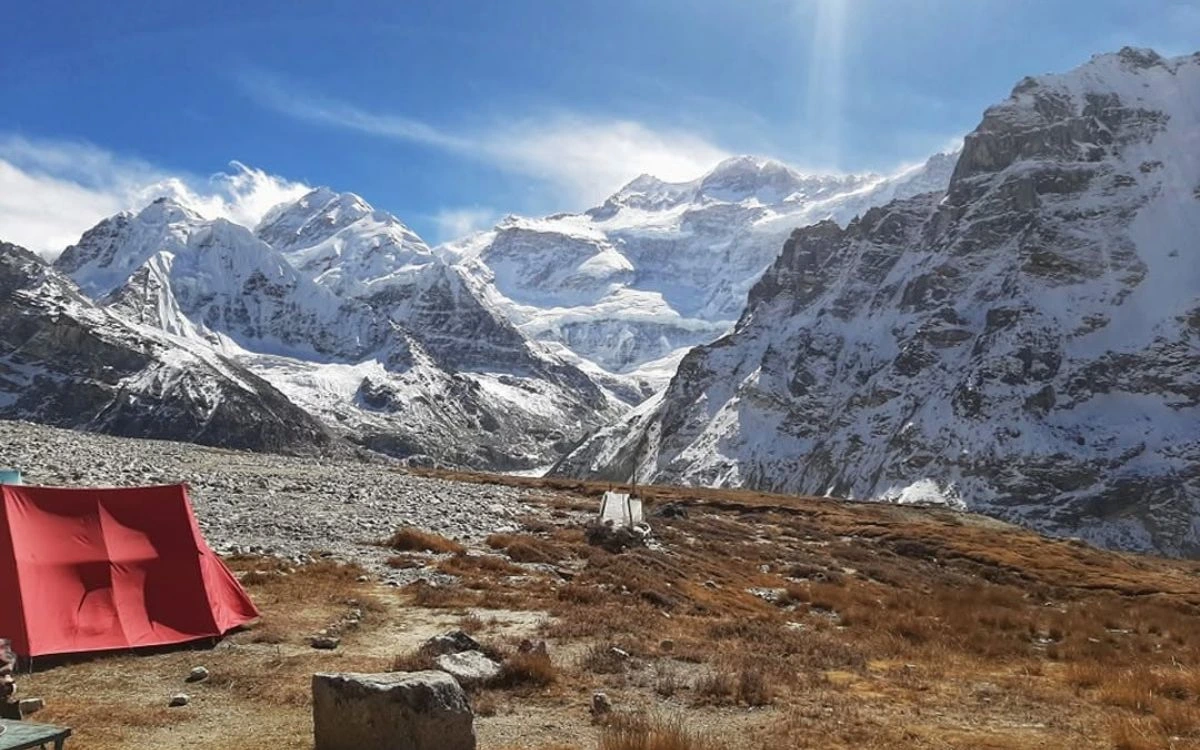
Red tent in a snowy, rocky valley with clear sky and some grass
Selecting the appropriate travel insurance is very important for trekkers and climbers in Nepal, particularly for high-altitude treks above 3,000 meters. The following companies are well-known and best travel insurance for trekking in Nepal for their coverage: Allianz Care, World Nomad, Cover More Travel Insurance, Clements Worldwide, World Trips, Global Rescue, Fast Cover Insurance (Australia/NZ), True Traveller Insurance, Trail Finders Insurance, IMG Insurance, and ASC 360 Insurance.
Travel Insurance for American Travelers Trekking and Climbing in Nepal
World Nomads (Explorer Plan)
This plan extends trekking and climbing activities up to 6,000 meters and is a popular high altitude travel insurance for over 6000m. It includes emergency medical services, helicopter rescue, trip interruption, and equipment insurance in the higher-tier plans. It is ideal for Everest Base Camp, Annapurna Circuit, and trekking peaks like Island Peak. It is essential to check if technical climbing is included in the plan.
Travel Guard (AIG) – With Adventure Sports Add-On
Travel Guard provides excellent medical and trip cancellation insurance. But for trekking above a certain altitude or mountaineering, an adventure sports rider is required. It is essential to check the altitude limits in writing before purchasing the plan.
Global Rescue (with IMG Insurance)
Global Rescue offers evacuation assistance without altitude restrictions. When paired with IMG travel medical insurance, it provides coverage for both rescue and hospitalization. This plan is ideal for technical climbing and expeditions above 6,000 meters.
Travel Insurance for European Trekkers and Climbers
True Traveller (UK & EU) – Adventure Pack
True Traveller’s trekking and climbing insurance extends to 6,000 meters with the Adventure Pack. This policy includes helicopter rescue and medical insurance adequate for Himalayan treks.
World Nomads (EU Version)
This policy provides the same benefits as the U.S. version, which includes coverage for high-altitude trekking and climbing under higher-tier policies. This policy is widely used by independent European trekkers.
Global Rescue
For climbers who attempt technical climbs, Global Rescue’s evacuation insurance is altitude-free. This policy is ideal for expedition climbing and is reliable climbing insurance in Nepal.
Travel Insurance for Australian Trekkers and Climbers in Nepal
World Nomads (Australia)
Covers trekking and climbing up to 6,000 meters under advanced plans. Covers helicopter evacuation, medical costs, and equipment. Good for Everest Base Camp and trekking peaks.
Allianz Australia (With Adventure Upgrade)
Offers good medical and evacuation benefits. Adventure activities need to be added to ensure high-altitude trekking and climbing are covered. Check the altitude limits before buying.
Global Rescue
Recommended for Australian climbers going on high-altitude or technical climbs where unlimited evacuation assistance is a consideration.
Travel Insurance for Asia-Pacific Trekkers in Nepal
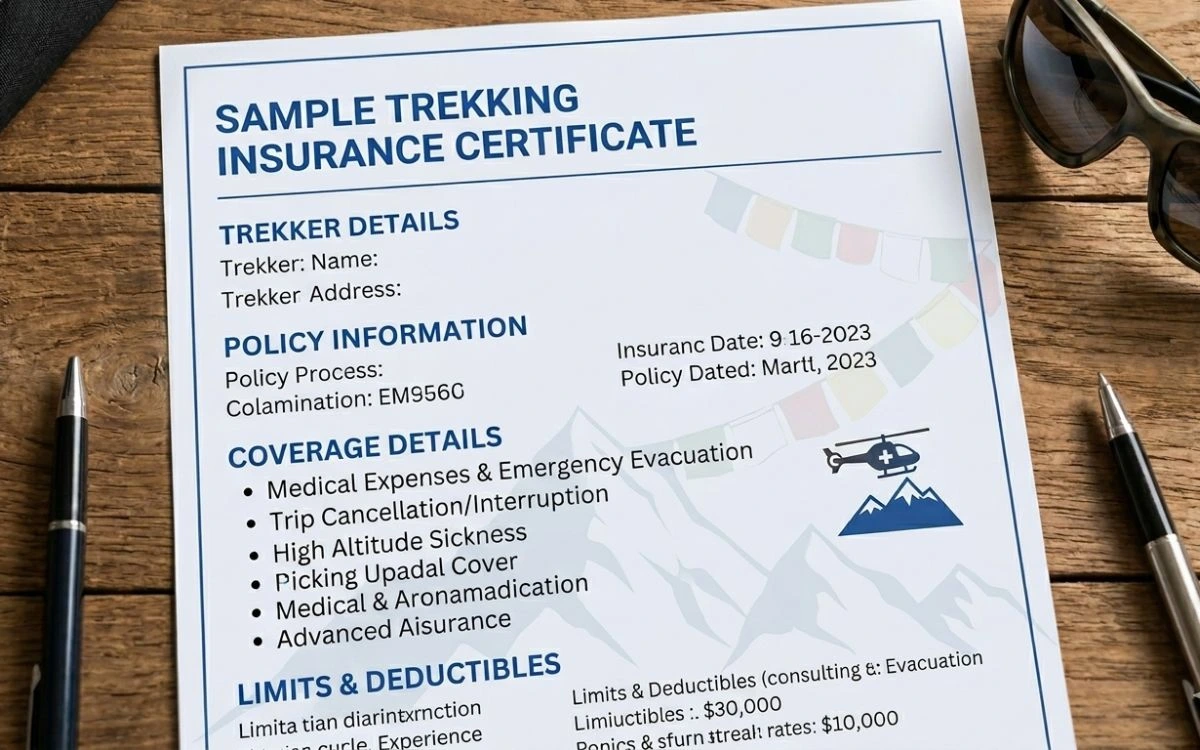
Sample photo of a trekking insurance document in Nepal
SafetyWing Nomad
Budget-friendly plan with coverage for trekking up to 4,500 meters, with extension options. Comes with emergency evacuation but minimal gear coverage. Good for moderate treks.
Rise & Shield (Adventure Plan)
Provides coverage up to 6,500 meters with adventure packages. Comes with helicopter evacuation and trip cancellation insurance. Good for high-altitude treks and non-technical climbs.
HDFC ERGO (India) – With Adventure Add-On
Adventure sports coverage can be added to plans for trekking and mountaineering activities. Always check altitude and climbing conditions.
Global Rescue
Recommended for Asia-Pacific climbers attempting technical or expedition-style peaks above 6,000 meters
Understanding Helicopter Evacuation and Medical Coverage in Nepal Treks
In the high Himalayan areas of Nepal, there are no roads and only basic medical facilities available. In the event of serious cases of Altitude Sickness, injury, or sudden illness, a helicopter rescue in Nepal may be the only viable and immediate option for accessing quality medical care. The cost of a single rescue mission can range from $5,000 to $10,000 or more, and the helicopter service will typically demand proof of insurance coverage or upfront payment before undertaking the rescue.
When traveling to high-altitude destinations, your insurance must specifically cover the highest altitude you plan to reach, usually 5,000 to 6,000 meters or higher. Your insurance policy must also cover emergency helicopter rescue services, altitude sickness, high-altitude medical care, hospitalization, emergency medical expenses of a minimum of $100,000, and medical evacuation benefits of a minimum of $200,000.
How to Choose the Best Travel Insurance for Trekking and Climbing in Nepal
Ensure your insurance policy covers the highest altitude of your trek or climb, usually 5,000-6,000 meters or above.
Check if it includes coverage for emergency helicopter evacuation, since the remote Himalayan regions have no road access.
Check if it includes emergency medical coverage for hospitalization, altitude sickness, and injuries, preferably with a minimum of $100,000.
Check if it includes medical evacuation coverage of at least $200,000, including transportation to Kathmandu or your home country if necessary.
Check if it includes coverage for high-altitude illnesses such as AMS, HAPE, and HACE.
Add trip interruption or cancellation insurance, especially for flights to mountain airstrips, which are often delayed due to weather.
Select insurance companies that provide direct billing arrangements with reputable hospitals in Kathmandu (such as CIWEC or Era International) to save you from paying large sums upfront.
For technical climbs or peaks above 6,000 meters, select mountaineering insurance companies that specialize in such activities.
Keep printed copies of your insurance and inform your trekking agency or guide about it so that they can access it quickly in case of emergencies.
Check if it includes coverage for search and rescue costs, which can be very high in the remote regions of Nepal.
Common Mistakes to Avoid When Buying Nepal Trekking and Climbing Insurance
Failing to select a policy that does not include high-altitude rescue. Since many treks in the Everest Region and Annapurna Region exceed 5,000 m, Travel insurance for trekking in Nepal must include your highest altitude.
Failing to verify helicopter rescue benefits. Helicopter rescues in the mountains can cost between USD 3,000 and 10,000, so your policy must specifically include emergency air evacuation.
Failing to recognize that trekking and climbing are different. Trekking is normally included, but technical climbing or peaks such as Island Peak may require separate mountaineering insurance.
Failing to consider policy exclusions. Some travel insurance policies do not cover altitude sickness, dangerous activities, or unguided climbs. Always check the policy exclusions.
Failing to purchase insurance based on value. Low-cost insurance may lack medical benefits and may not include high-altitude rescue or equipment protection.
Failing to check medical benefits. Severe injuries may require hospitalization in Kathmandu, which can be costly without comprehensive benefits.
Forgetting trip delay and cancellation coverage. Weather frequently delays flights to mountain airstrips, and extra costs can add up quickly.
Not declaring pre-existing medical conditions. If you fail to disclose health issues, the insurer can reject your claim.
Buying insurance after arriving in Nepal. Some companies limit or deny coverage if the policy starts after your trip begins.
Not carrying proof of insurance. Trekking agencies and rescue teams may ask for your policy details during emergencies.
Trekking and Climbing Permits in Nepal: Travel Insurance Requirements
Trekkers on a mountain path next to a village
As of 2025/ 2026, all foreign trekkers and climbers must have complete Travel insurance for high-altitude treks to acquire permits like TIMS, ACAP, and MCAP, among others. Your travel insurance should cover medical emergencies, evacuation, and high-altitude rescue. It is important to note that your insurance should cover helicopter evacuation, which is common above 3,000 meters. It should also cover high-altitude trekking and climbing, which is common up to 6,000 meters.
Insurance Scams in Nepal: What Trekkers and Climbers Should Know
Although the majority of claims filed by tourists in Nepal are genuine, there have been instances of fraud related to helicopter evacuations and insurance claims. In some instances, there have been unnecessary flights organized by companies, which are then presented to the insurer as a rescue mission, leading to potential claims disputes or unexpected expenses for the trekker or climber.
To remain insured, select a reputable insurance company that specifically covers trekking and high-altitude climbing. Before committing to a high-altitude rescue in Nepal, ensure that it is medically required and approved by your insurance company. Keep all your receipts, medical documents, and evacuation papers. Familiarity with your insurance policy’s altitude restrictions, medical evacuation, and helicopter rescue terms will help you avoid insurance issues.
How to Protect Yourself from Travel Insurance Scams on Nepal Treks
Purchase insurance before entering Nepal. Select a reliable international insurance company that specifically includes trekking and high-altitude rescue services in its coverage.
Check the altitude limit. Ensure your insurance policy includes the highest altitude of your trek (e.g., 5,000m, 6,000m, and so on).
Verify helicopter rescue services in writing. Ensure that emergency evacuation and high-altitude rescue services in Nepal are included in your insurance policy.
Select licensed trekking companies and guides. Check if they are registered with the Nepal Tourism Board.
Notify your insurer before evacuation (if possible). Obtain approval from your insurance company before accepting a helicopter rescue.
Request medical clearance. Only a licensed doctor can verify that evacuation is medically necessary.
Save all documents and receipts. Store medical records, helicopter bills, and communication records for future claims.
Exercise caution in decision-making. Refuse a rescue if it is not medically necessary for your safety.
Discuss your insurance policy with your guide. This will facilitate proper coordination during a genuine emergency.
Understand the claims process. Familiarize yourself with the required documents and procedures for submission after your trek.
FAQs
Is travel insurance mandatory for trekking in Nepal?
Travel insurance is not mandatory, but most trekking companies and permit centers require you to have insurance, especially for high-altitude treks and climbs. It will protect you from high medical and rescue bills.
What altitude limit should my Nepal trekking insurance cover?
Your insurance must extend to the highest point of your trek or climb. For normal treks such as Everest Base Camp, you will need insurance up to 5,500-6,000m, but for climbing peaks such as Island Peak or Mera Peak, you will need insurance up to 6,000m and above. For technical climbs, you will need specialized insurance policies with no altitude limits.
Does travel insurance cover altitude sickness in Nepal?
Yes, most high-altitude insurance policies will cover altitude sickness, but only if you seek medical attention.
Rocks, prayer flags, and text with a mountain and clear blue sky.
How much does high-altitude travel insurance for Nepal cost in 2026?
Budget Plans: USD 50-100 for 2 weeks, including trekking up to 4,500m with limited gear protection.
Mid-Range Plans: USD 100-180, include trekking and climbing up to 6,000m with helicopter evacuation and moderate gear protection.
Premium Plans: USD 250+, include unlimited altitude, technical climbing, comprehensive medical, and rescue protection.
Can I buy trekking insurance after arriving in Nepal?
It is possible, but not advised. Many insurers will not cover incidents that occur before or shortly after the purchase of insurance. Purchasing insurance before departure will ensure that you are covered from the onset.
What is the difference between trekking insurance and climbing insurance in Nepal?
Trekking insurance will cover walking or hiking on trails, usually up to 5,000-6,000m, with medical and evacuation benefits.
Climbing insurance will cover technical climbs and peaks above 6,000m, often with specialized rescue and equipment protection.
What documents are required to claim insurance in Nepal?
You will require your policy certificate, medical reports, receipts for treatment or evacuation, trekking/climbing permits, and any incident reports from agencies or local authorities. You should keep both digital and hard copies.
Conclusion
For your safety and financial protection when trekking or climbing in Nepal, having travel insurance is a must. When climbing or trekking in remote mountainous areas where medical care is not easily available, you may have to be evacuated by helicopter due to high altitude sickness, a medical emergency, or weather delays. Having the right kind of travel insurance for trekking and climbing in Nepal will cover emergency rescue, hospitalisation, and climbing activity up to your maximum allowable altitude. Before you buy an insurance plan, be sure to review the following: altitude limits, evacuation coverage, and policy exclusions.
Having good travel insurance allows you to concentrate on enjoying your trek or climb with peace of mind, knowing that you are protected from unexpected expenses. It also protects the investment you made for your adventure as well as your well-being. If you are planning to trek or climb in high-altitude areas of Nepal, please contact Himalayan Recreation for information on how we can assist you in preparing safely for your trip.


.webp)



-1.webp)
-1.webp)
-1.webp)